
March 21 is not an arbitrary date. It is the third month, the twenty-first day: three copies of the twenty-first chromosome. That is what trisomy 21 means, and it is why World Down Syndrome Day falls on 21 March each year, marked by schools, families and organisations around the world and recognised by the United Nations.
The day has settled into a few familiar traditions. Mismatched socks. Blue and yellow. An assembly. All of that is fine, and all of it is optional. What actually matters is whether the day leaves a classroom, a staffroom or a family a little better informed than it was on 20 March. Here are fifteen ideas that do that, grouped so you can pick what fits your school, your class or your kitchen table.
The odd-sock tradition grew out of the Lots of Socks campaign, and it works because it is visible all day. Chromosomes are roughly sock-shaped, and two deliberately different socks start more conversations than a poster ever will.
Two rules make it more than a fashion statement. First, say why. A line in the morning bulletin, a note home to families, a two-minute explanation at the start of the day. Second, do not make the child with Down syndrome the only person explaining. If anyone is fielding questions, it should be adults and peers who have been given the words.
Assemblies can be the best twenty minutes of the month or a room full of children staring at their shoes. A few choices tip the balance.
Twenty to twenty-five minutes is plenty. Let students introduce each part. A short segment where a class shares what they learned, a book read aloud, a short film the students made themselves, a pledge written by the student council. If it runs past half an hour, you have lost the back rows.
A child with Down syndrome should not be presented as a hero for existing, and should not be put on stage to be applauded. If a young person with Down syndrome speaks, let them choose what to talk about and let them speak for themselves. Prepare with them, not for them, and ask permission before photographing or sharing anything.
Pick approaches that match the age group. With younger children, keep it concrete: everyone has things that are the same and things that are different, and both are ordinary. With older students, you can go further into rights, inclusive education and the history of how people with Down syndrome have been treated and how that has changed.
A simple discussion structure works across most ages:
Choose books written or co-written by people with Down syndrome, or that feature a character with Down syndrome as a full character rather than a plot device. Read them in the days around 21 March, not only on the day.
The most useful activity on 21 March is often the least photogenic: checking how things actually run. Does everyone get picked for teams? Who is alone at break? Are lessons adapted, or is the student with Down syndrome working on separate material in the corridor? Do the teaching assistants get time to plan with teachers?
These are not one-day questions, and you should not try to answer them alone. Every child's needs are individual, and decisions about support and education should be made with the family and the school's own team, not from a general article.
Use the attention of 21 March to start something that outlasts it. A few options:
Pick one. A single programme that actually runs beats five that fizzle by April.
Before you start: tell families what is happening so nobody is caught off guard. Ask the person at the centre of it whether they want to be involved at all, and accept a no without negotiation. Brief whoever is speaking so they are not improvising.
On the day: keep it brief, keep it warm, and make sure the explanation is carried by many voices rather than one. Take photos only with permission, and think about who will see them in five years.
Afterwards: send a two-line note to staff and families saying what happened and what is coming next. Then put the date in the calendar for next year, and the follow-up tasks into a month that is not March.
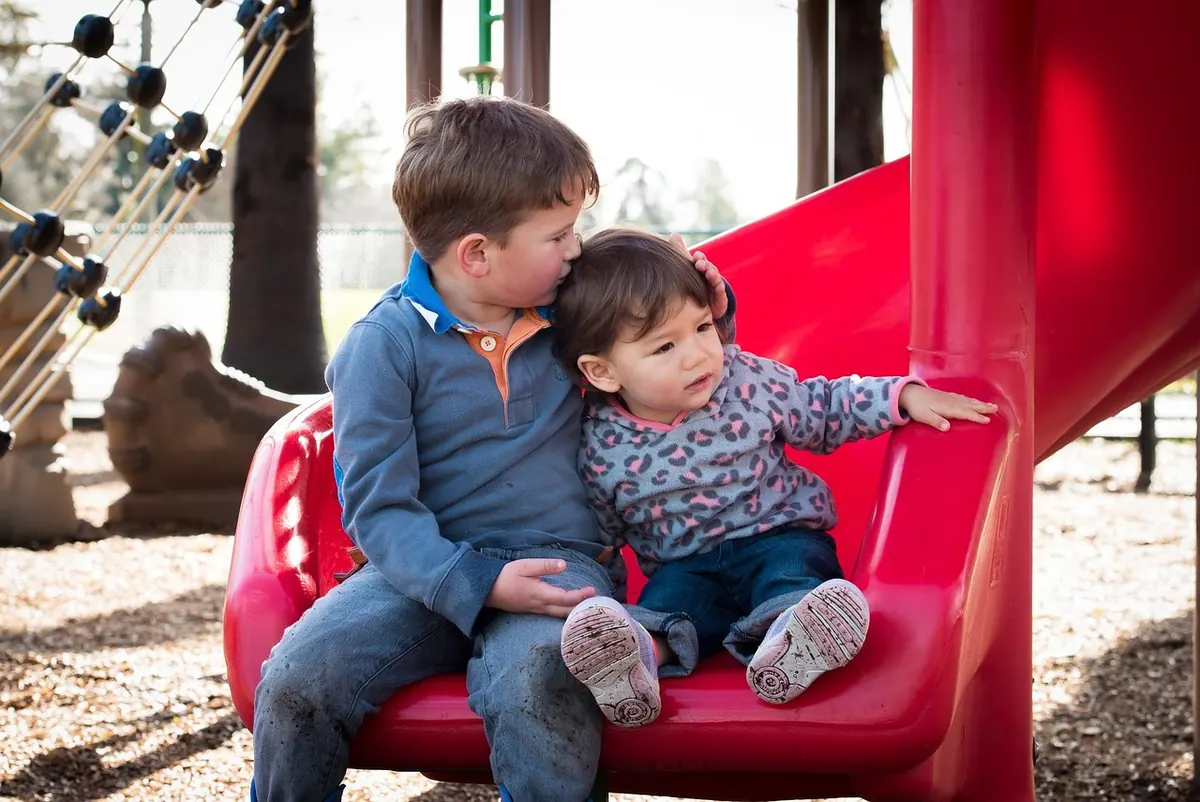
Photo: George59 / Pixabay
A sibling's honest account of growing up beside a brother with Down syndrome — the delayed love, the real work of...

One family's first year with Down syndrome: the early intervention team that came to the living room, the...

Day camp, overnight camp, therapeutic programs, and inclusion support each suit different kids. Here's how to...

Celebrating little ones with Down syndrome.